

Can Dogs Eat Apples With Skin On? Safety, Benefits, and Tips
Last Updated on October 4, 2026
Apples are a popular, crunchy, and naturally sweet fruit that many dogs enjoy. If you are slicing an apple and your dog gives you those hopeful eyes, you may wonder: Can dogs eat apples with skin on?
The short answer is yes, dogs can eat apples with the skin on, as long as the apple is washed, cut into safe pieces, and served without the core, seeds, or stem. Apple skin contains fiber and nutrients, but it can also carry pesticide residue or cause mild stomach upset in some dogs if eaten in large amounts.
Like any treat, apples should be given in moderation. They can be a healthy snack, but they should not replace your dog’s normal balanced diet.
In this article, we’ll cover whether apple skin is safe for dogs, the benefits of apples, the risks to watch for, how to serve apples safely, and when apples may not be a good choice for your dog.
Can Dogs Eat Apples With Skin On?
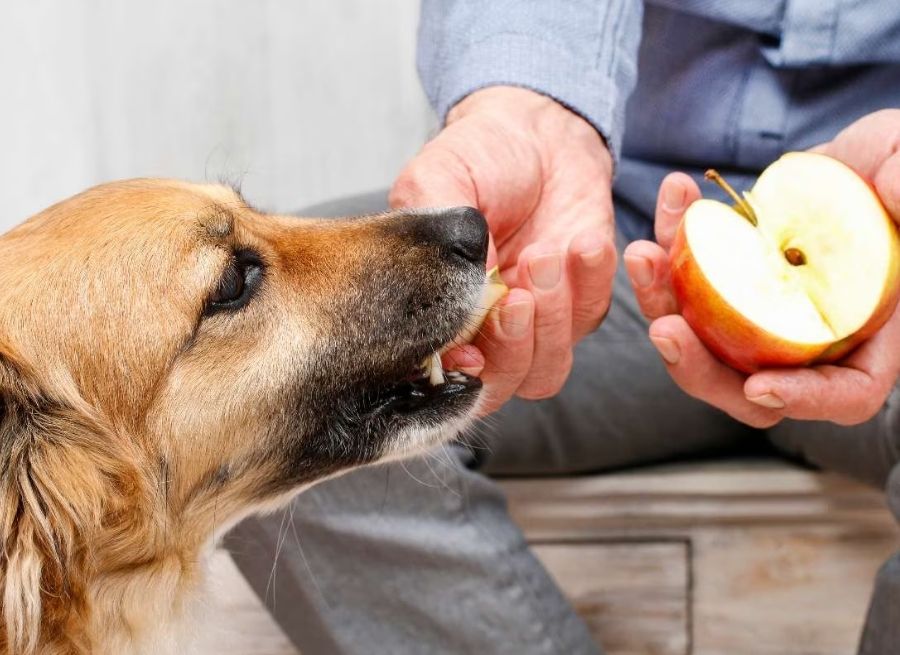
Yes, dogs can eat apples with the skin on. Apple skin is generally safe for dogs and can provide extra fiber, antioxidants, and texture. Many dogs enjoy the crunch of apple slices with the peel still attached.
However, you should always wash apples thoroughly before giving them to your dog. Apple skin can hold dirt, wax, bacteria, or pesticide residue. If you are concerned about pesticides, you can choose organic apples or peel the apple before serving.
The most important rule is to remove the seeds, core, and stem. Apple seeds contain a small amount of amygdalin, which can release cyanide when chewed and digested. A few accidentally swallowed seeds are unlikely to harm most dogs, but it is still safest to remove them completely.
Read More – How to Bathe a Dog That Hates Water: Calm Step-by-Step Guide
Are Apples Safe for Dogs?
Yes, apples are safe for most dogs when served properly. They are low in fat, naturally sweet, and full of water and fiber. Apples can be a refreshing treat, especially for dogs that enjoy crunchy snacks.
Safe apple parts for dogs include:
- Apple flesh
- Apple skin
- Small apple slices
- Small apple cubes
- Unsweetened apple pieces
Unsafe or risky apple parts include:
- Apple seeds
- Apple core
- Apple stem
- Large chunks
- Rotten apples
- Apple desserts with sugar or spices
The core is not only a seed source but also a choking hazard, especially for small dogs. Always slice apples before feeding them.
Is Apple Skin Good for Dogs?
Apple skin can be good for dogs in small amounts. It contains fiber and plant compounds that support overall health. The skin also adds crunch, which many dogs enjoy.
Potential benefits of apple skin include:
- Extra dietary fiber
- Antioxidants
- Natural texture
- Support for healthy digestion
- A satisfying low-fat snack
However, apple skin can be harder to digest than the flesh. Some dogs with sensitive stomachs may do better with peeled apples.
If your dog has never eaten apple skin before, start with a small piece and watch for any signs of stomach upset.
Health Benefits of Apples for Dogs

Apples can be a healthy occasional treat for dogs. They provide vitamins, fiber, and hydration while being lower in calories than many commercial treats.
Apples Provide Fiber
Apples contain dietary fiber, which can support healthy digestion. Fiber may help regulate stool quality and keep your dog feeling satisfied.
However, too much fiber can cause gas, bloating, or diarrhea. That is why apples should be given in small amounts.
Apples Contain Vitamins
Apples contain vitamins such as vitamin C and vitamin A. Dogs usually get the nutrients they need from a complete dog food, but apples can still add a small nutritional boost.
Vitamin C acts as an antioxidant, while vitamin A supports vision, immune health, and skin health.
Apples Are Low in Fat
Apples are naturally low in fat, making them a lighter treat option compared with fatty snacks. This can be helpful for dogs that need lower-fat treats.
However, apples still contain natural sugar, so portion control is important.
Apples Add Hydration
Apples have a high water content, which can help add moisture to your dog’s snack routine. They can be especially refreshing on warm days when served chilled.
Apples Can Support Dental Freshness
The crunchy texture of apples may help remove some surface debris from your dog’s teeth. However, apples are not a replacement for brushing, dental chews, or veterinary dental care.
Think of apples as a crunchy treat, not a complete dental solution.
Risks of Feeding Apples With Skin to Dogs
Although apples are safe for most dogs, there are some risks to keep in mind.
Pesticide Residue on Apple Skin
Apple skin may contain pesticide residue, wax, or dirt. Washing the apple well helps reduce this risk.
To make apples safer:
- Rinse under running water
- Rub the skin with your hands or a produce brush
- Choose organic apples if preferred
- Peel the apple if your dog is sensitive
Never feed your dog apples that are moldy, rotten, or spoiled.
Digestive Upset
Some dogs may get an upset stomach from apple skin, especially if they eat too much. The fiber in apples can cause loose stool, gas, or bloating.
Signs of digestive upset may include:
- Diarrhea
- Vomiting
- Gas
- Drooling
- Stomach discomfort
- Loss of appetite
If your dog reacts poorly, stop feeding apples and speak with your vet if symptoms continue.
Choking Hazard
Large apple pieces, cores, and whole apples can be choking hazards. This is especially true for small dogs or dogs that gulp food without chewing.
Always cut apples into small, bite-sized pieces before giving them to your dog.
Apple Seeds Can Be Harmful
Apple seeds contain a compound that can release cyanide when chewed and digested. While a tiny number of seeds is unlikely to cause serious harm in most dogs, repeated exposure or large amounts can be dangerous.
To be safe, always remove all seeds before feeding apples to your dog.
Natural Sugar Content
Apples contain natural sugar. This is usually fine in small amounts, but too much can contribute to weight gain or digestive upset.
Dogs with diabetes or weight problems should only eat apples if your veterinarian says it is okay.
Read More – How Often Should You Wash a Dog Bed? Complete Cleaning Guide
How to Safely Feed Apples With Skin to Dogs
Feeding apples safely is simple if you follow a few steps.
Step 1: Wash the Apple
Rinse the apple thoroughly under running water. Rub the skin to remove dirt, wax, and possible pesticide residue.
Step 2: Remove the Core, Seeds, and Stem
Cut the apple open and remove the entire core, all seeds, and the stem. These parts should not be given to your dog.
Step 3: Cut Into Small Pieces
Slice the apple into thin pieces or small cubes. The right size depends on your dog’s size.
For small dogs, use tiny pieces. For medium or large dogs, slices are usually fine, but avoid large chunks.
Step 4: Start With a Small Amount
If your dog has never had apples with skin before, start with one or two small pieces. Watch for any signs of digestive upset.
Step 5: Serve Plain
Only give plain apple pieces. Do not add sugar, caramel, cinnamon sugar, chocolate, whipped cream, or other toppings.
Plain apples are the safest option.
How Much Apple Can Dogs Eat?
Apples should be given as a treat, not a main food. Treats should generally make up only a small part of your dog’s daily calories.
A simple serving guide:
| Dog Size | Suggested Apple Serving |
|---|---|
| Extra-small dogs | 1–2 tiny pieces |
| Small dogs | 2–3 small pieces |
| Medium dogs | 3–5 small slices |
| Large dogs | 5–6 slices |
| Extra-large dogs | Up to half an apple, sliced |
These are general guidelines. Your dog’s ideal amount depends on their size, health, activity level, and diet.
If your dog is overweight, diabetic, or has a sensitive stomach, ask your vet before adding apples regularly.
Can Puppies Eat Apples With Skin?
Yes, puppies can eat small amounts of apple with skin, but you should be extra careful with portion size and choking risk.
Puppies have smaller mouths and more sensitive digestive systems than adult dogs. Cut apple into very tiny pieces and start with a small amount.
Avoid giving puppies apple cores, seeds, stems, or large slices. If your puppy gets diarrhea or vomiting after eating apple, stop offering it and contact your vet if symptoms are severe or persistent.
Can Dogs Eat Green Apples With Skin?
Yes, dogs can eat green apples with skin, as long as they are washed, sliced, and served without seeds or core.
Green apples, such as Granny Smith apples, are often more tart than red apples. Some dogs love the flavor, while others may not like it. Because they are more acidic, green apples may bother some sensitive stomachs.
Start with a small piece and see how your dog reacts.
Can Dogs Eat Red Apples With Skin?
Yes, dogs can eat red apples with skin. Red apples are usually sweeter than green apples and may be more appealing to dogs.
As with any apple, wash it thoroughly, remove the core and seeds, and cut it into safe pieces before serving.
Can Dogs Eat Apple Core?
No, dogs should not eat apple cores. Apple cores are tough, hard to digest, and can be a choking hazard. They also contain seeds, which should be avoided.
If your dog accidentally eats a small apple core, watch them closely for choking, vomiting, diarrhea, or discomfort. Contact your vet if your dog is small, ate a large core, or shows any concerning symptoms.
Can Dogs Eat Apple Seeds?
Dogs should not eat apple seeds. Apple seeds contain amygdalin, which can release cyanide when chewed and digested.
A few seeds are unlikely to poison a healthy medium or large dog, but it is not worth the risk. Always remove seeds before feeding apples.
If your dog eats many apple seeds or shows signs such as vomiting, weakness, trouble breathing, or collapse, contact a veterinarian immediately.
Can Dogs Eat Applesauce?
Dogs can eat plain, unsweetened applesauce in small amounts. However, many store-bought applesauce products contain added sugar, flavors, preservatives, or spices.
Choose applesauce that is:
- Unsweetened
- Plain
- Free from xylitol
- Free from added spices
- Served in small amounts
Xylitol is extremely toxic to dogs, so always check labels carefully.
Can Dogs Eat Apple Pie or Apple Desserts?
No, dogs should not eat apple pie or apple desserts. These foods often contain sugar, butter, nutmeg, spices, and other ingredients that are not good for dogs.
Nutmeg can be harmful to dogs, and high-fat desserts may cause stomach upset or pancreatitis in some dogs.
Stick with plain apple slices instead.
When Should Dogs Avoid Apples?
Apples are safe for many dogs, but they may not be suitable for every dog.
Avoid or limit apples if your dog:
- Has diabetes
- Is overweight
- Has a sensitive stomach
- Is on a special diet
- Has pancreatitis concerns
- Gets diarrhea after fruit
- Has trouble chewing
- Tends to gulp food whole
If your dog has a medical condition, ask your veterinarian before adding new treats.
Healthy Ways to Serve Apples to Dogs
There are several simple ways to offer apples safely.
Try serving apples:
- Fresh and sliced
- Chilled for a crunchy snack
- Frozen in small pieces
- Mixed with plain dog-safe yogurt
- Added to a puzzle feeder
- Spread with a tiny amount of xylitol-free peanut butter
- Baked plain without sugar or spices
Always keep portions small and avoid toppings that contain sugar, chocolate, xylitol, or unsafe spices.
Read More – Why Does My Dog Sit on My Feet? 9 Common Reasons Explained
FAQs About Dogs Eating Apples With Skin
Can dogs eat apple skin?
Yes, dogs can eat apple skin. It is generally safe and contains fiber and nutrients. Wash the apple well first to remove dirt, wax, and possible pesticide residue.
Should I peel apples before giving them to my dog?
You do not have to peel apples for most dogs. However, peeling may be better if your dog has a sensitive stomach or if you are concerned about residue on the skin.
Can apple skin upset a dog’s stomach?
Yes, apple skin can upset some dogs’ stomachs, especially if they eat too much. Start with a small piece and watch for vomiting, gas, or diarrhea.
Can dogs eat apples every day?
Some dogs can eat small amounts of apple regularly, but it should stay a treat. Apples contain natural sugar, so daily feeding should be limited and balanced with your dog’s overall diet.
Are apple seeds poisonous to dogs?
Apple seeds can be harmful because they contain a compound that can release cyanide. A few seeds may not cause serious harm, but dogs should not eat them. Remove all seeds before serving apples.
Can dogs eat whole apples?
No, it is not recommended to give dogs whole apples. Whole apples can be a choking risk, and the core and seeds should be removed. Always slice apples first.
Can small dogs eat apples with skin?
Yes, small dogs can eat apples with skin, but the pieces should be very small. Remove the core and seeds, and offer only a small amount.
Can dogs eat apples with peanut butter?
Yes, dogs can eat small apple pieces with a little peanut butter, as long as the peanut butter does not contain xylitol. Use only a small amount because peanut butter is high in calories and fat.
Are green apples better than red apples for dogs?
Both green and red apples can be safe for dogs. Green apples are more tart and may be slightly more acidic, while red apples are usually sweeter. Either is fine in moderation.
What should I do if my dog ate an apple core?
If your dog ate an apple core, monitor them for choking, vomiting, diarrhea, or discomfort. Contact your veterinarian if your dog is small, ate multiple cores, or shows any unusual symptoms.
Conclusion
Dogs can eat apples with the skin on as long as the apple is washed, sliced, and served without the core, seeds, or stem. Apple skin is generally safe and can provide extra fiber and nutrients, but it may upset some dogs’ stomachs if they eat too much.
Apples can be a healthy occasional treat because they are crunchy, low in fat, hydrating, and naturally sweet. However, they still contain sugar, so moderation is important.
To serve apples safely, wash them well, remove all seeds and core, cut them into small pieces, and offer them plain. If your dog has diabetes, digestive issues, weight concerns, or a special diet, ask your veterinarian before feeding apples regularly.
When prepared correctly, apple slices with skin can be a tasty and safe snack your dog can enjoy.