
Dog Bed vs Crate: How to Choose the Best Sleeping Option
Last Updated on October 4, 2026
When you compare Dog Bed vs Crate options for sleeping, an open dog bed works best for fully house-trained pets who don’t chew household items, because it offers free movement and joint relief. A secure crate wins for young puppies or destructive dogs who need strict boundaries to prevent night accidents and home damage.
The options compared
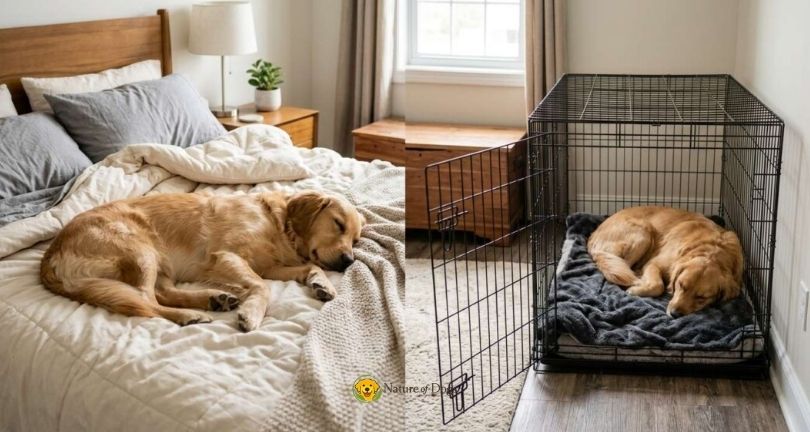
Choosing the right sleeping setup depends on your dog’s age, training level, and behavior overnight.
Open Floor Bed
An open bed gives your dog a dedicated cushion without any physical walls or latches.
- Measure your dog from snout to tail while sleeping stretched out, then add 8 to 12 inches to choose the correct pad size.
- Place the cushion against an interior wall away from direct cold drafts, exterior doors, and direct heater vents.
- Guide your pet to the cushion using a single treat, repeat your settle command, and reward calm lying down.
- Wash the removable zip cover once every 7 to 14 days on a standard warm cycle to clear dirt.
This setup gives adult pets natural sleeping positions so they can stretch, curl, or shift cool spots across the night. It also protects aching joints in older dogs when you pick orthopedic memory foam. Its clear weakness is freedom: an unsupervised, anxious dog will wander, chew wooden furniture, or soil living room carpets. This option isn’t for teething puppies under six months old who explore the home with their teeth.
Enclosed Wire Crate
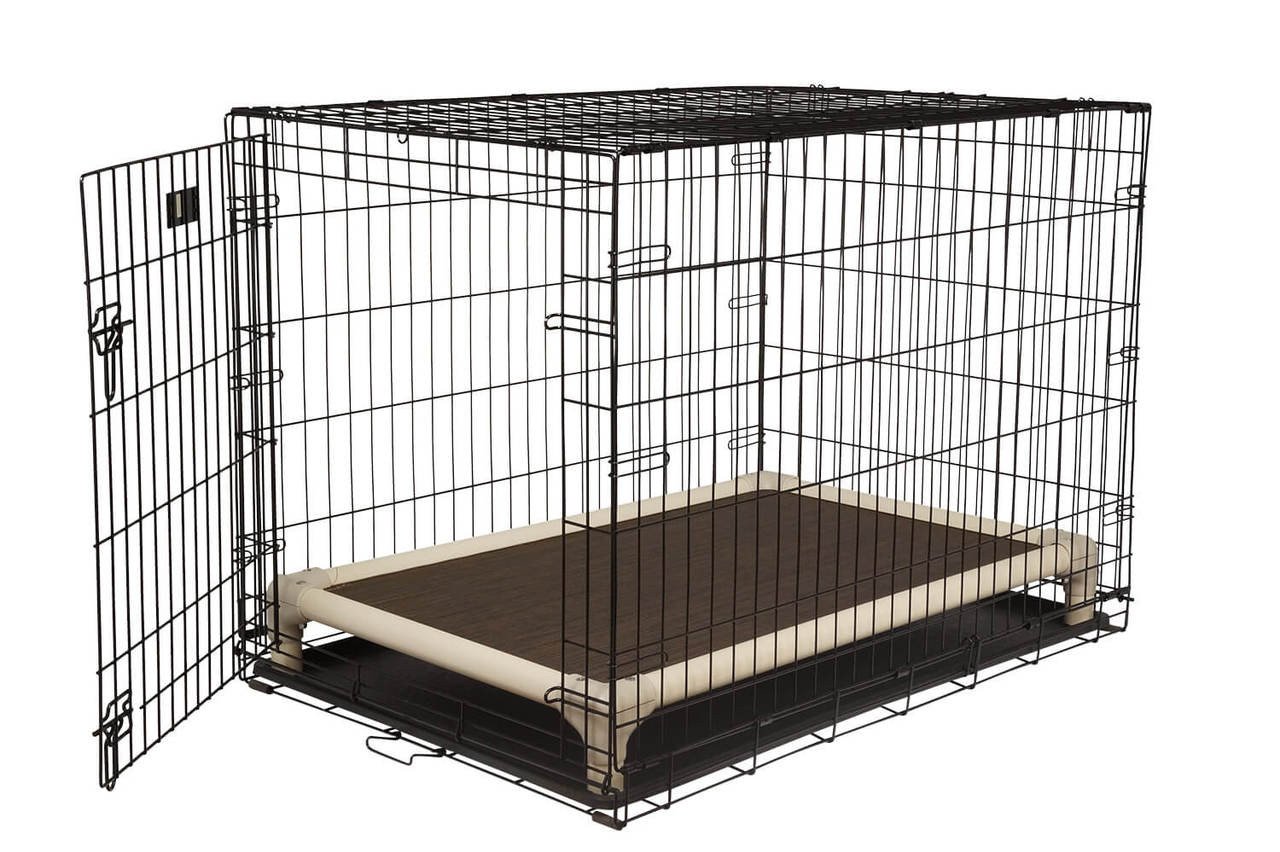
A wire crate provides a four-sided metal enclosure that uses a dog’s natural denning instinct to limit roaming.
- Select a metal cage where the adult dog can stand up, turn completely around, and lie flat on its side.
- Set the wire frame in a common room corner, clip the base pan firmly, and leave the door latched wide open for entry.
- Toss 3 to 5 small dry kibble treats inside across 10-minute training sessions so the dog enters willingly without force.
- Close the latch for 5 minutes while sitting beside the frame, gradually building up to overnight stays over 14 days.
The metal structure keeps young pets completely safe from swallowing electrical cords, socks, or toxic objects while owners sleep. According to guidance on animal confinement from the Humana Animal Society, crates also speed up bathroom training because dogs avoid soiling their immediate sleeping spot. The main drawback is confinement stress; an improperly trained dog will whine, bark, or scratch the metal doors.
Combination Setup
This method places a fitted orthopedic mattress directly inside a heavy-duty crate to blend physical support with safety walls.
- Measure the interior tray dimensions of your crate within a half-inch tolerance.
- Insert a heavy-duty, chew-resistant pad that lays completely flat across the base pan without curled edges.
- Secure the crate door open with a bungee cord or side latch during daylight hours so your pet walks in for resting.
- Fasten the door closed only during bedtime or when leaving the house for standard blocks of time.
You get total chew prevention alongside deep cushioning that keeps elbows and hips off the cold plastic tray. However, this method requires the highest budget because you must buy two distinct products at once. For dogs that chew soft fabrics constantly, a heavy rubber mat inside the cage serves as a simple fourth option, though it lacks deep orthopedic support.
Which one should you use?
If you’re in a hurry because you adopted an adult, house-trained dog today, choose an open floor bed because it requires zero behavioral training or adjustment periods.
If you’re raising a puppy for the first time, use an enclosed crate because it mechanically prevents nighttime bathroom mistakes and keeps teething mouths away from wall corners.
If you want the best possible result whatever it takes, invest in the combination setup because it protects household safety while ensuring your dog’s pressure points rest on supportive foam.
The trade-off balances structural security against natural movement. A cage restricts freedom to keep your house intact, while an open bed grants complete liberty at the risk of property damage. If your dog sleeps quietly through the night, use an open bed; if your dog chews or wanders, use a cage.
The rules that apply whichever way you choose
Size standards are critical: the dog must always be able to stand, turn, and stretch without touching the boundaries. For crates, verify safety standards from your pet gear maker to ensure wire spacing prevents stuck paws. Always inspect the sleeping area first for hazards like loose electrical cords, small swallowable items, or cold room drafts. Partway through ownership, inspect seams, foam inserts, and latch pins for tears or structural bends. When any fabric tears expose inner batting, remove the bedding immediately to prevent intestinal blockage from swallowed fluff.
Frequently asked questions
Can a dog sleep in a crate forever?
Yes, many adult dogs enjoy sleeping in a crate for their entire lives. Once a dog learns to view the enclosure as a quiet sanctuary, the den-like atmosphere gives them security. Just make sure the door stays open during daylight hours so they enter freely.
Is it safe to leave a collar on inside a crate?
No, leaving a collar on an enclosed dog creates a severe strangulation risk. Metal tags and collar buckles can snag between the wire bars if the dog scratches or shifts. Always unclip neck collars and walking harnesses before latching the cage door shut for the night.
How long can a puppy stay in a crate overnight?
A puppy can generally stay confined overnight for its age in months plus one hour, up to six hours maximum. A three-month-old puppy holds its bladder for about four hours. Forcing younger puppies to wait longer causes cage soiling and breaks their natural sanitation instinct.
Why does my dog chew its open bed?
Dogs chew their beds because of boredom, teething discomfort, or fabric anxiety. Soft foam provides an easy physical target for destructive chewing urges. If you see active chewing, remove soft cushions immediately to avoid expensive veterinary surgery from swallowed stuffing, and swap to a chew-resistant cot.
What happens if a crate is too large?
If an enclosure is too large, your puppy will use one side for sleeping and the opposite side as a bathroom. This mistake breaks house training quickly. Buy a unit that includes a metal divider panel, moving the wall back only as the puppy grows larger.
Final Thoughts
Choosing the right setup depends on your dog’s personality and current stage of life. If you’re still unsure, try setting up a cozy bed near their crate for a few nights. You’ll quickly see where they feel most comfortable, and you won’t have to worry about their safety while you sleep.