
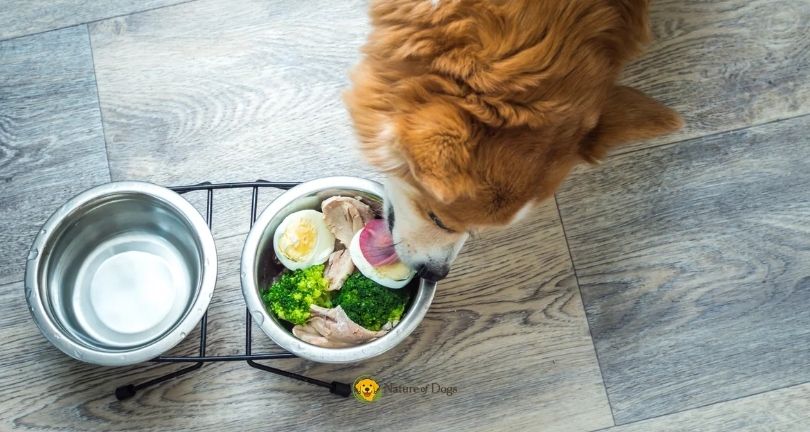
Can Dogs Eat Cooked Eggs Every Day?
Yes, dogs can eat cooked eggs every day, but only in small portions that fit their daily calorie needs. Most medium to large dogs do well with half to one whole cooked egg per day, while small dogs should only receive a quarter to a half.
Daily Limits for Cooked Eggs by Dog Weight
A whole large chicken egg contains roughly 70 to 75 calories along with 5 grams of fat. Nutritionists generally follow the rule that treats and supplemental foods should make up no more than 10% of a pet’s daily calorie intake.
| Dog Weight Category | Example Breeds | Daily Calorie Need | Safe Daily Egg Portion |
|---|---|---|---|
| Toy (under 10 lbs) | Chihuahua, Pomeranian | 200–275 kcal | 1/4 egg (chopped) |
| Small (10–25 lbs) | Beagle, French Bulldog | 300–600 kcal | 1/4 to 1/2 egg |
| Medium (26–55 lbs) | Border Collie, Aussie | 650–1,000 kcal | 1/2 to 1 whole egg |
| Large (56–90 lbs) | Lab, Golden Retriever | 1,100–1,500 kcal | 1 whole egg |
| Giant (over 90 lbs) | Mastiff, Great Dane | 1,600–2,200+ kcal | 1 to 2 whole eggs |
If your dog weighs 15 pounds, a whole egg supplies nearly a quarter of their daily fuel, which crowds out balanced nutrients from their regular kibble.
How to Safely Prepare Eggs for Dogs
Plain cooking methods are mandatory when preparing eggs for any pet.
Hard-boiled and plain scrambled eggs are the two easiest options to prepare at home:
- Hard-boil an egg in boiling water for 10 minutes, cool it completely in cold water, peel away the entire shell, and chop it into bite-sized pieces.
- Whisk a raw egg in a bowl with a fork, pour it into a dry non-stick skillet on medium heat, and stir until completely firm with no wet liquid left behind.
- Poach an egg in simmering water without vinegar or salt until the white and yolk are fully set.
Tip: Cook eggs completely dry without adding any butter, margarine, cooking spray, or vegetable oil, because supplemental fats trigger digestive upset.
Never add salt, pepper, garlic, onions, or chives to the pan.
Is It Safe to Feed Cooked Eggs to Your Dog Long-Term?
Plain cooked eggs are safe for long-term daily feeding as long as your dog doesn’t have pre-existing medical conditions like pancreatitis or kidney failure. Cooking breaks down avidin, a protein in raw egg whites that blocks biotin absorption, making the egg completely digestible and safe.
The trade-off of daily egg feeding is managing dietary fat against total calories. While nutritious, eggs supply high energy density that adds up fast. According to the USDA FoodData Central entry for whole eggs, a standard hard-boiled egg contains roughly 5.3 grams of total lipid fat. That amount of fat works wonderfully for an active farm dog, but it can quickly cause issues for a senior dog that sleeps on the sofa most of the day.
This daily addition isn’t for dogs recovering from pancreatitis, animals placed on strict low-fat veterinary diets, or pets struggling with obesity. If your dog has a sensitive gut, test a teaspoon of cooked egg first; if they show loose stool, stop immediately.
What Real Problems Happen From Overfeeding Eggs?
Feeding too many eggs or preparing them incorrectly leads to fast digestive consequences. Recognizing these issues early keeps a simple snack from turning into an expensive clinic visit.
Why is my dog getting loose stools after eating eggs?
Sudden dietary fat causes loose stools and diarrhea when a dog’s gut flora isn’t used to digesting rich table foods. Introducing a full egg at once overwhelms the small intestine, speeding up digestion and pulling water into the stool. Cut the portion back to a single spoonful or skip a few days until digestion firms up.
Why does my dog have painful gas?
Eggs contain sulfur-bearing amino acids like methionine and cysteine, which intestinal bacteria convert into hydrogen sulfide gas. Excessive gas means your dog receives more protein than their system can absorb at one time. Lower the daily serving size to eliminate painful stomach cramping and smelly flatulence.
What happens if I use butter or oil?
Grease from cooking oils and butter stresses the canine pancreas, an organ responsible for producing fat-digesting enzymes. Excess fat inflames the pancreas, leading to severe abdominal pain, vomiting, and lethargy.
Related guides
Frequently Asked Questions
Can dogs eat cooked eggshells along with the egg?
Yes, dogs can eat clean, cooked eggshells if they’re ground into a fine powder. Coarse shell fragments have sharp edges that scratch the throat and stomach. Crushed eggshell powder provides dietary calcium, but dogs eating complete commercial kibble don’t need extra calcium in their bowls.
Are scrambled eggs better for dogs than hard-boiled eggs?
Neither preparation is better nutritionally, provided both are cooked without butter, oil, milk, or salt. Hard-boiled eggs are simpler to portion and store in your refrigerator for several days. Scrambled eggs allow you to mix small, measured spoonfuls directly into kibble so picky dogs eat smoothly.
Can eating eggs daily cause high cholesterol in dogs?
No, dietary cholesterol doesn’t affect dogs the same way it affects humans. Dogs are naturally resistant to diet-induced vascular disease and arterial plaque build-up. The primary concern with daily egg consumption remains excess calorie intake and high fat levels, which cause pancreatitis and obesity rather than heart disease.
Can young puppies eat cooked eggs every day?
Puppies can eat tiny bites of cooked egg as training rewards, but daily feeding isn’t recommended. Growing puppies require an exact balance of calcium, phosphorus, and protein from commercial puppy kibble. Adding eggs daily alters those critical ratios and can disrupt healthy bone and joint development.
What should I do if my dog accidentally eats raw egg?
Monitor your dog closely for vomiting, reduced appetite, or watery diarrhea over the next 48 hours. Raw eggs carry risks of bacterial contamination from Salmonella, which upsets the gastrointestinal tract. If your pet shows lethargy, repeated vomiting, or fever, contact your local veterinary clinic for guidance.