How to Potty Train a Puppy in an Apartment: Step-by-Step Guide
Last Updated on October 4, 2026
Potty training a puppy in an apartment can feel challenging, especially if you do not have quick access to a backyard. When you live several floors up, every potty break may involve grabbing a leash, waiting for an elevator, walking through hallways, and hoping your puppy can hold it long enough to get outside.
The good news is that apartment potty training is absolutely possible. Puppies can learn where and when to go potty as long as you give them a clear routine, frequent bathroom breaks, rewards, supervision, and patience.
The key is consistency. Your puppy needs to understand one simple rule: potty happens in the right place, not randomly inside the apartment. Whether you choose outdoor potty training, pee pads, a balcony grass patch, or a combination method, the goal is to make the correct potty spot easy to understand and rewarding.
In this guide, you’ll learn how to potty train a puppy in an apartment, how often to take your puppy out, what supplies you need, how to handle accidents, and how to avoid common potty training mistakes.
Can You Potty Train a Puppy in an Apartment?
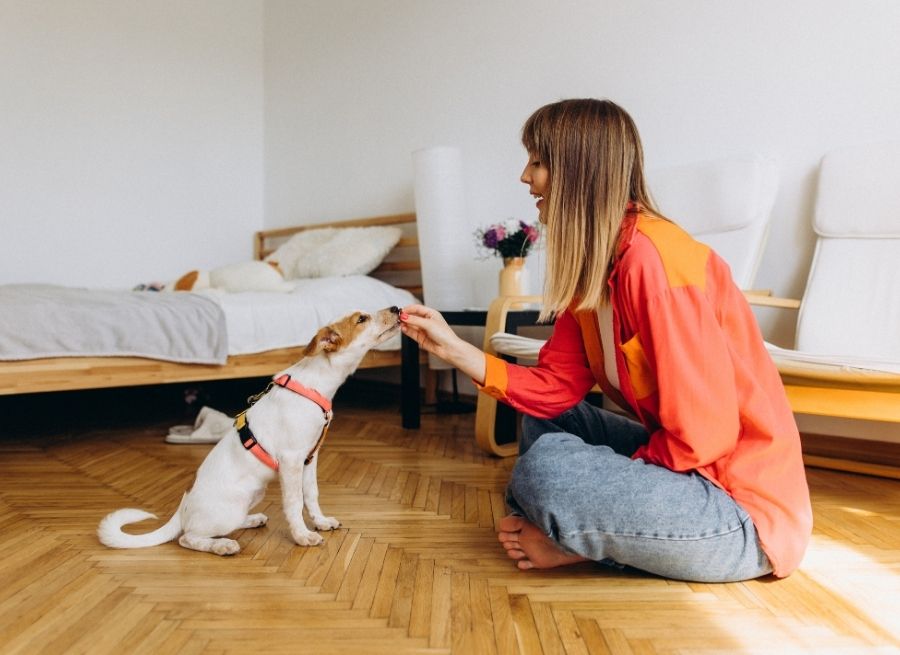
Yes, you can potty train a puppy in an apartment. It may take more planning than potty training in a house with a yard, but the process is very similar. Puppies learn through routine, repetition, and rewards.
The main difference is that apartment puppies may need extra help because the potty area is not always immediately available. You may need to use elevators, stairs, shared hallways, sidewalks, dog relief areas, or indoor potty options.
Apartment potty training works best when you:
- Take your puppy out frequently
- Use the same potty spot consistently
- Reward immediately after your puppy goes
- Supervise your puppy indoors
- Limit freedom until they are reliable
- Clean accidents properly
- Follow a predictable schedule
The earlier you create a routine, the faster your puppy will understand what you expect.
Read More – How Much Should I Feed My Puppy by Age? Puppy Feeding Guide
How Long Does It Take to Potty Train a Puppy in an Apartment?
Most puppies take several weeks to a few months to become reliably potty trained. Some puppies learn quickly, while others need more time depending on their age, breed, bladder control, previous training, and consistency.
A general timeline looks like this:
| Puppy Age | Potty Training Expectation |
|---|---|
| 8–10 weeks | Needs very frequent breaks; accidents are normal |
| 10–12 weeks | Begins learning routine but still has limited control |
| 3–4 months | Can hold it a little longer; fewer accidents with consistency |
| 4–6 months | Many puppies improve significantly |
| 6+ months | Many puppies can be reliable, but some still need practice |
Remember, young puppies physically cannot hold their bladder for long periods. Accidents do not mean your puppy is being stubborn. They usually mean your puppy was not taken out soon enough, had too much freedom, or missed a cue.
Apartment Puppy Potty Training Supplies
Before you start, gather the right supplies. Having everything ready makes potty training easier and less stressful.
Useful supplies include:
- Leash and collar or harness
- High-value training treats
- Poop bags
- Crate or puppy playpen
- Baby gates
- Enzymatic cleaner
- Puppy pads, if using them
- Artificial grass patch, if using one
- Washable floor mats
- Paper towels
- Potty bell, optional
- Treat pouch
- Cleaning gloves
The most important items are treats, supervision tools, and an enzymatic cleaner. Rewards teach your puppy what to do, while proper cleanup helps prevent repeat accidents in the same spot.
Choose a Potty Training Method
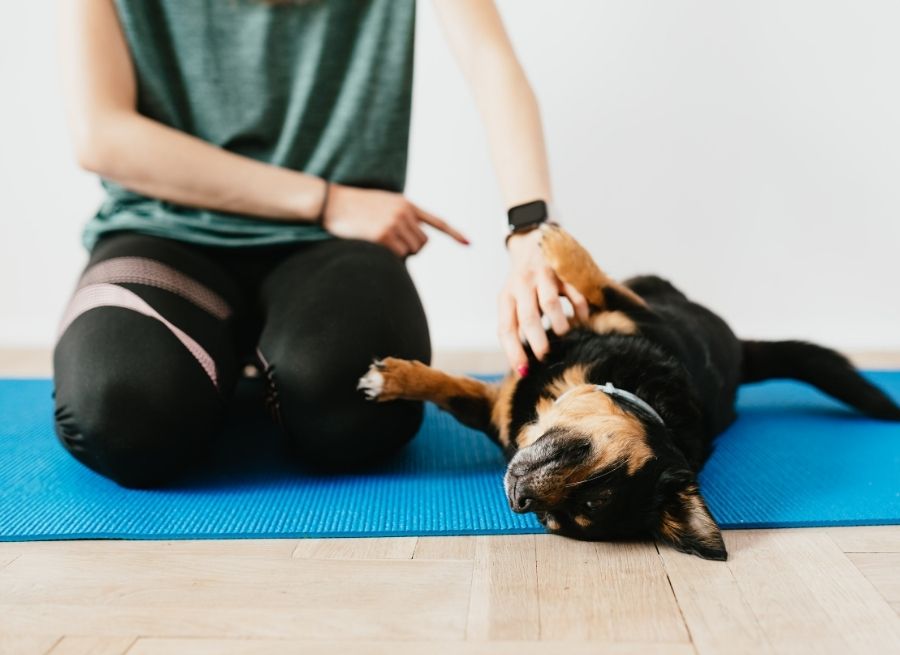
Before training begins, decide where you want your puppy to go potty. Apartment owners usually choose one of three main methods.
Outdoor Potty Training
Outdoor potty training means taking your puppy outside every time they need to pee or poop. This is usually the best long-term option if you want your dog to use grass, sidewalks, or a designated outdoor dog area.
Pros of outdoor potty training:
- Clear long-term habit
- Less indoor odor
- Easier transition to adult dog routine
- Avoids dependence on pee pads
Cons of outdoor potty training:
- Requires frequent trips outside
- Can be difficult in high-rise buildings
- Weather can be inconvenient
- Young puppies may not hold it long enough at first
If you choose this method, speed and consistency are important. As soon as your puppy wakes up, eats, drinks, or shows potty signs, take them outside immediately.
Pee Pad Training
Pee pads can be helpful for very young puppies, small breeds, high-rise apartments, bad weather, or owners who cannot get outside quickly every time.
Pros of pee pad training:
- Convenient for apartments
- Helpful during early puppyhood
- Useful during bad weather or late-night potty breaks
- Can prevent accidents on floors
Cons of pee pad training:
- Some puppies confuse pads with rugs or mats
- Transitioning outside may take extra work
- Pads can create odor if not changed often
- Some puppies chew or shred pads
If you use pee pads, place them in one consistent location. Do not scatter pads all over the apartment, or your puppy may think the entire home is a potty area.
Balcony or Indoor Grass Patch Training
A grass patch or artificial turf potty system can be a good middle option. It gives your puppy a specific potty surface that feels more like outdoor grass.
Pros of grass patch training:
- Good for high-rise apartments
- Easier than rushing outside every time
- More natural surface than pee pads
- Can help with later outdoor transition
Cons of grass patch training:
- Needs regular cleaning
- May smell if not maintained
- Not all balconies allow pet potty setups
- Some puppies may still need outdoor practice
If using a balcony, make sure it is safe. Your puppy should never be left alone on a balcony, and there should be no gaps where they could slip through.
How to Potty Train a Puppy in an Apartment
To potty train a puppy in an apartment, create a strict schedule, take your puppy to the same potty spot often, reward immediately after they go, supervise closely indoors, and clean accidents with an enzymatic cleaner.
Here is the step-by-step process.
Step 1: Create a Potty Schedule
Puppies need frequent bathroom breaks. A predictable schedule helps prevent accidents and teaches your puppy when potty breaks happen.
Take your puppy to the potty spot:
- First thing in the morning
- After waking from naps
- After eating
- After drinking water
- After playtime
- After training sessions
- Before bedtime
- During the night if needed
- Anytime they sniff, circle, or act restless
A young puppy may need to go out every 30 to 60 minutes when awake. As they grow, they can gradually hold it longer.
A common guideline is that puppies can hold their bladder for about one hour per month of age, plus one additional hour. However, this is only a rough estimate. Many puppies need more frequent breaks when excited, active, or newly adopted.
Step 2: Use the Same Potty Spot Every Time
Choose one potty spot and use it consistently. This may be a patch of grass outside, a building dog relief area, a balcony grass patch, or a pee pad station.
Using the same spot helps because puppies are guided by scent and routine. When your puppy smells previous potty odors in the correct area, they are more likely to go there again.
Try to keep the potty spot:
- Easy to access
- Quiet enough for your puppy to focus
- Safe and clean
- Consistent every day
- Away from food and sleeping areas
If you are training outside, avoid turning potty breaks into long walks at first. Go to the potty spot, wait quietly, reward after success, then continue with the walk if you want.
Step 3: Reward Immediately After Potty
Reward timing matters. Give your puppy a treat and praise immediately after they finish peeing or pooping in the right place.
Do not wait until you are back upstairs in your apartment. Your puppy may not connect the reward with going potty if too much time passes.
Use a happy voice and say something like:
- “Yes! Good potty!”
- “Good job!”
- “Good pee!”
- “Good outside!”
Then give a small treat right away.
This teaches your puppy that using the correct potty spot leads to good things.
Step 4: Add a Potty Cue
A potty cue is a phrase you say when you want your puppy to go. Over time, your puppy can learn to associate the phrase with the behavior.
Common potty cues include:
- “Go potty”
- “Do your business”
- “Hurry up”
- “Go pee”
- “Bathroom”
Say the cue softly when your puppy is sniffing or about to go. After they finish, reward them.
Avoid repeating the cue nonstop. Say it once or twice, then wait calmly.
Read More – Can Dogs Eat Apples With Skin On? Safety, Benefits, and Tips
Step 5: Supervise Your Puppy Indoors
Supervision is one of the biggest keys to potty training success. If your puppy has full freedom in the apartment, they may sneak away and have accidents.
When your puppy is not fully potty trained, keep them:
- In the same room as you
- On a leash near you
- In a puppy playpen
- Behind baby gates
- In a crate for short rest periods
Watch for potty signs such as:
- Sniffing the floor
- Circling
- Whining
- Pacing
- Suddenly leaving the room
- Squatting
- Going near the door
- Restlessness after play
- Wandering toward a previous accident spot
If you see these signs, interrupt calmly and take your puppy to the potty area immediately.
Step 6: Use a Crate or Playpen Correctly
A crate or playpen can help with potty training because puppies are less likely to soil their sleeping area if the space is properly sized.
The crate should be large enough for your puppy to:
- Stand up
- Turn around
- Lie down comfortably
But it should not be so large that your puppy can potty in one corner and sleep in another.
Never use the crate as punishment. It should feel like a safe resting place, not a place your puppy fears.
A playpen can also be useful in apartments because it limits your puppy’s access to rugs, corners, bedrooms, and other accident-prone areas.
Step 7: Clean Accidents Properly
Accidents will happen. When they do, clean them thoroughly with an enzymatic cleaner made for pet urine.
Regular household cleaners may remove the visible stain, but they may not fully remove the scent. If your puppy can still smell urine, they may return to the same spot.
When cleaning accidents:
- Blot urine first
- Use an enzymatic cleaner
- Follow the product instructions
- Let the cleaner sit long enough
- Avoid ammonia-based cleaners
- Block access to the area temporarily
Do not punish your puppy for accidents. Punishment can make puppies afraid to potty in front of you, which makes training harder.
Apartment Puppy Potty Training Schedule
A schedule helps your puppy learn faster. Here is a sample routine for a young puppy living in an apartment.
Sample Schedule for an 8–12 Week Old Puppy
| Time | Activity |
|---|---|
| 6:30 AM | Wake up and potty immediately |
| 7:00 AM | Breakfast |
| 7:15 AM | Potty break |
| 8:00 AM | Play/training, then potty |
| 9:00 AM | Nap in crate or pen |
| 10:30 AM | Wake up and potty |
| 12:00 PM | Lunch |
| 12:15 PM | Potty break |
| 1:00 PM | Play, then potty |
| 2:00 PM | Nap |
| 4:00 PM | Wake up and potty |
| 5:30 PM | Dinner |
| 5:45 PM | Potty break |
| 7:00 PM | Play, then potty |
| 9:00 PM | Calm time and potty |
| 10:30 PM | Final potty before bed |
| Overnight | Potty break if needed |
Very young puppies may need nighttime potty breaks. As your puppy matures, they should gradually sleep longer without needing to go out.
How Often Should You Take a Puppy Out in an Apartment?
When potty training, take your puppy out more often than you think they need. Preventing accidents is easier than fixing bad habits later.
General potty break guide:
| Puppy Age | Daytime Potty Breaks |
|---|---|
| 8–10 weeks | Every 30–60 minutes when awake |
| 10–12 weeks | Every 1–2 hours |
| 3–4 months | Every 2–3 hours |
| 4–6 months | Every 3–4 hours |
| 6+ months | Every 4–6 hours, depending on the dog |
These are general estimates. Puppies often need to potty sooner after eating, drinking, playing, or waking up.
How to Handle Elevator and Hallway Potty Problems
Apartment puppies sometimes pee in hallways, elevators, or lobbies because they cannot hold it until they reach the outdoor potty spot. This is common with young puppies.
To reduce hallway accidents:
- Carry very young puppies outside if needed
- Go out before your puppy is desperate
- Use a leash and move quickly
- Avoid stopping to talk to neighbors
- Take the same route each time
- Reward only at the correct potty spot
- Use a temporary pee pad or grass patch if outside is too far
If your puppy frequently has accidents before getting outside, they may not be physically ready to hold it that long. In that case, an indoor or balcony potty setup may help during early training.
Should You Use Pee Pads in an Apartment?
Pee pads can be useful, but they should be used thoughtfully. They are helpful for some apartment situations, especially if you live in a high-rise or have a very young puppy.
Pee pads may be a good option if:
- You live many floors up
- Your puppy is too young to hold it
- You cannot get outside quickly
- Bad weather is extreme
- Your puppy is a toy breed
- Your dog will use indoor potty long-term
However, pee pads can slow outdoor potty training if your puppy learns that going inside is acceptable. If your long-term goal is outdoor potty only, use pads as a temporary tool and transition carefully.
How to Transition From Pee Pads to Outside
If your puppy starts on pee pads but you want them to potty outside eventually, make the transition gradually.
Try this method:
- Move the pee pad closer to the door every few days.
- Place the pad just outside the door or near the exit area if possible.
- Take your puppy outside when they head toward the pad.
- Reward heavily when they potty outdoors.
- Slowly reduce the size or number of pads.
- Stop rewarding indoor pad use once outdoor habits improve.
Be patient. Some puppies need time to understand that the bathroom location has changed.
What to Do When Your Puppy Has an Accident
Accidents are part of potty training. How you respond matters.
If you catch your puppy in the act:
- Stay calm
- Interrupt gently with “oops” or a soft clap
- Pick them up or guide them to the potty spot
- Reward if they finish in the correct place
If you find an accident later:
- Do not scold your puppy
- Do not rub their nose in it
- Clean it with enzymatic cleaner
- Improve supervision
- Take your puppy out more often
Your puppy will not understand punishment after the fact. They will only learn that you are scary around messes.
Common Potty Training Mistakes in Apartments
Avoiding common mistakes can make training much easier.
Common mistakes include:
- Waiting too long between potty breaks
- Giving too much freedom too soon
- Not rewarding immediately
- Punishing accidents
- Using the wrong cleaner
- Changing potty spots too often
- Letting puppy wander unsupervised
- Expecting young puppies to hold it too long
- Not cleaning pee pads often enough
- Using pee pads without a transition plan
- Ignoring signs that puppy needs to go
Most potty training problems come from unclear routines or missed timing, not from a puppy being “bad.”
How to Potty Train a Puppy While Working Full-Time
Potty training is harder if you work long hours, especially with a young puppy. Puppies cannot hold their bladder all day.
If you work full-time, consider:
- Coming home during lunch
- Hiring a dog walker
- Asking a trusted friend or neighbor for help
- Using dog daycare when age-appropriate
- Setting up a safe playpen with a potty area
- Using pee pads or grass patch temporarily
- Taking a few days off when puppy first comes home
A young puppy left alone too long will have accidents because they physically cannot hold it. Planning ahead prevents frustration and helps your puppy succeed.
Nighttime Potty Training in an Apartment
Nighttime potty training can be difficult in apartments, but it improves with age and routine.
Tips for nighttime potty training:
- Take your puppy out right before bed
- Keep the last potty break calm and boring
- Limit intense play close to bedtime
- Keep your puppy’s crate near you
- Set an alarm for young puppies
- Carry your puppy if they may pee on the way out
- Avoid turning nighttime potty breaks into playtime
If your puppy cries at night, they may need to potty, especially if they are very young. Take them out calmly, reward if they go, then return to bed.
How to Know Your Puppy Is Potty Trained
Your puppy may be becoming potty trained when they consistently choose the correct potty area and can hold it between breaks.
Signs of progress include:
- Fewer accidents
- Going to the door or pad when needed
- Pottying quickly in the correct spot
- Holding bladder longer
- Sleeping longer at night
- Responding to potty cues
- Staying clean in the crate
- Having predictable bathroom times
Even after progress, continue supervising. Many puppies need several accident-free weeks before they can be trusted with more freedom.
When to Worry About Potty Training Problems
Some potty issues may be caused by medical problems rather than training.
Contact your veterinarian if your puppy:
- Pees very frequently
- Strains to urinate
- Cries while peeing
- Has blood in urine
- Has diarrhea
- Has sudden accidents after progress
- Drinks excessive water
- Seems lethargic
- Cannot control urine leakage
- Has vomiting along with accidents
Urinary tract infections, parasites, digestive problems, and other health issues can interfere with potty training.
Read More – How to Bathe a Dog That Hates Water: Calm Step-by-Step Guide
FAQs About Potty Training a Puppy in an Apartment
Is it harder to potty train a puppy in an apartment?
It can be more challenging because you may not have quick access to a yard, but it is very possible. A consistent schedule, frequent potty breaks, rewards, and supervision make the biggest difference.
How often should I take my puppy out to pee in an apartment?
Young puppies may need to go out every 30 to 60 minutes when awake. They also need potty breaks after sleeping, eating, drinking, playing, and before bedtime.
Should I use pee pads for apartment potty training?
Pee pads can be helpful for young puppies, small breeds, high-rise apartments, or owners who cannot get outside quickly. However, if your long-term goal is outdoor potty training, you should plan to transition away from pads gradually.
How do I stop my puppy from peeing in the hallway?
Take your puppy out sooner, carry them if they are very young, avoid delays, and use the same quick route outside. If your puppy cannot hold it long enough to reach outside, consider a temporary indoor or balcony potty option.
What should I do if my puppy pees inside?
If you catch them in the act, interrupt calmly and take them to the potty spot. If you find the accident later, simply clean it with enzymatic cleaner and improve supervision. Do not punish your puppy.
Can I potty train my puppy on a balcony?
Yes, you can use a balcony grass patch or potty tray if your building allows it and the balcony is safe. Never leave your puppy unattended on a balcony, and clean the potty area regularly to prevent odor.
How long can a puppy hold pee overnight?
It depends on age. Very young puppies may need one or more nighttime breaks. As they grow, many puppies gradually learn to sleep through the night without needing to pee.
How do I teach my puppy to ask to go outside?
Take your puppy to the same door before every potty break. You can teach a cue like sitting by the door or ringing a potty bell. Reward your puppy when they signal and then potty in the right place.
Why does my puppy pee right after coming inside?
Your puppy may have been too distracted outside, did not fully empty their bladder, or did not understand the goal of the trip. Keep potty breaks calm, wait long enough, use a cue, and reward immediately after they go.
When will my puppy be fully potty trained?
Many puppies improve significantly by 4 to 6 months, but full reliability may take longer. Breed, age, routine, supervision, and consistency all affect the timeline.
Conclusion
Potty training a puppy in an apartment takes patience, planning, and consistency. Because you may not have immediate access to a yard, your puppy needs a clear routine and frequent chances to potty in the right place.
Choose a potty method that fits your living situation, whether that is outdoor training, pee pads, a balcony grass patch, or a temporary combination. Take your puppy out often, use the same potty spot, reward immediately, supervise indoors, and clean accidents with an enzymatic cleaner.
Avoid punishment and unrealistic expectations. Young puppies are still developing bladder control, so accidents are part of the learning process.
With a steady schedule and positive reinforcement, your puppy can learn good bathroom habits — even in a high-rise apartment.