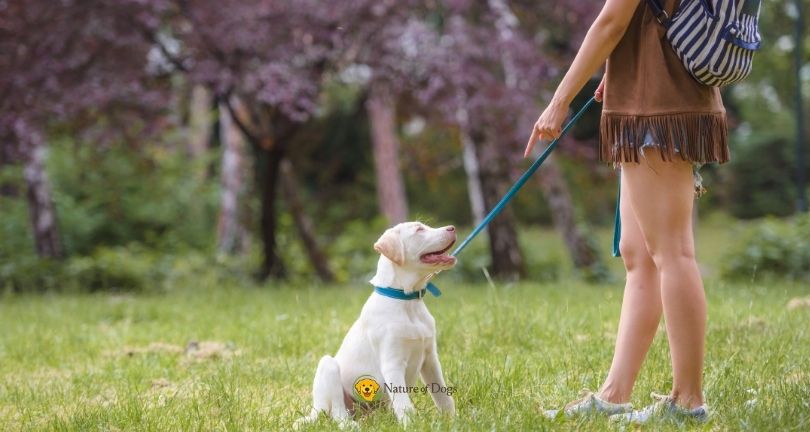
How to Train Your Dog to Walk Calmly on a Leash: Easy Steps
Training your dog to walk calmly on a leash takes 2 to 4 weeks of daily practice, costs only the price of simple treats, and rates as medium effort because it requires strict patience. You must have a standard fixed leash before your first session. Pulling usually happens because dogs walk faster than humans and explore by scent.
Leash training gear

| Item | How much | Why it’s needed | A substitute |
|---|---|---|---|
| Fixed leash | One 4 to 6-foot nylon lead | Keeps control without neck tension | Leather flat lead |
| Soft treats | 30 to 40 pea-sized bits | Rewards fast responses during training | Diced boiled chicken breast |
| Treat pouch | 1 waist-worn pouch | Gives you instant treat access | A deep jacket pocket |
| Flat buckle collar | 1 properly fitted collar | Holds standard ID tags securely | none — don’t swap this |
| Front-clip harness | 1 fitted chest harness | Steers chest to stop hard pulling | Standard back-clip harness |
Before you start
- Clear your hallway or living room of toys, food bowls, and clutter to remove floor distractions.
- Put other family pets in a separate room behind a closed door.
- Check your dog’s harness fit by sliding two fingers under the straps; if three fingers fit, tighten it.
- Measure your treat portions from your dog’s daily food count so you don’t overfeed them.
- Skipping the quiet indoor practice is the main mistake people make, and it costs them weeks of failed walks because the outside world is too exciting. If your dog shows extreme fear, lunges violently, or bites the leash aggressively, stop immediately and hire an animal behaviorist certified through the Animal Behavior Society directory.
Step by step
- Stand quietly in a low-distraction hallway with your dog on a loose 6-foot leash. Wait until your dog looks at your face, which confirms they’re focused on you.
-
Deliver one pea-sized treat directly at your outer pant seam within 2 seconds of eye contact. This teaches the dog that standing beside your leg pays off.
-
Take 2 slow steps forward while holding the leash loop firmly with both hands against your stomach. Stop immediately if your dog moves past your knee.
-
Freeze completely the exact second the leash becomes tight. Don’t yank the strap back, because pulling against a dog triggers an automatic reflex to pull harder.
-
Wait in silence until your dog releases the tension and turns back toward you. A loose dip in the leash tells you this step worked.
-
Step backward 1 pace to lure your dog back to your side. Mark the return with a verbal click or the word “yes” once their shoulder aligns with your hip.
-
Feed 1 treat at your hip level while you keep moving forward for 3 more paces. Repeating this reward spot builds a strong habit of staying near your side.
-
Walk 10 feet across the room, stopping every time the leash straightens. Your dog should pause and turn back within 3 seconds of each stop.
-
Shift the practice to your driveway or quiet yard once your dog walks indoors for 5 minutes without pulling once.
How to know it worked
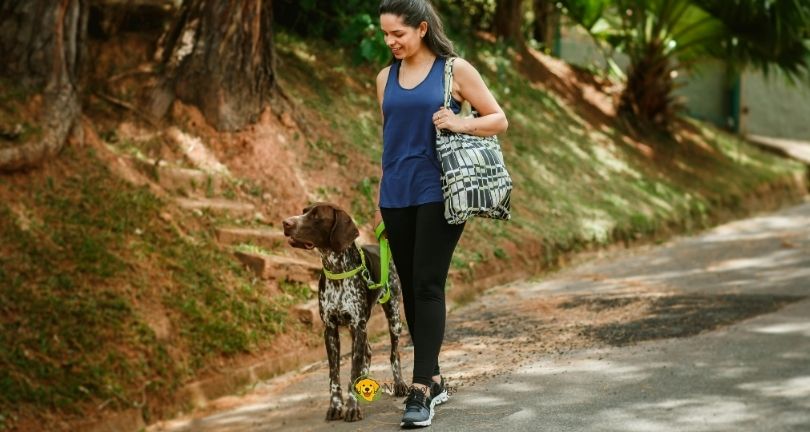
You’ll know the training worked when the leash hangs down in a gentle “J” curve between your hand and the harness collar ring for an entire block. Your dog checks in by making eye contact at least once every 30 to 60 seconds without you calling their name. If your arm feels sore after 5 minutes, or the dog chokes against their collar, the session failed. That means the outside setting has too many distractions for their current skill level. When this happens, move the next session back inside your house for 3 days before you try the sidewalk again.
If something goes wrong
| What happened | Why | What to do |
|---|---|---|
| Dog bites the leash | Dog feels overstimulated or playful | Drop treats on ground |
| Dog sits and refuses walking | Dog feels nervous or scared | Take two steps back |
| Dog bolts toward squirrels | Prey drive triggers high arousal | Turn and walk away |
| Dog ignores high-value treats | Setting has too much stimulation | Return to indoor practice |
| Dog pulls harder when stopped | Opposition reflex kicks in automatically | Stand still like tree |
How often to do this
Practice for 5 to 10 minutes, multiple times daily. Short sessions work best. Age and environment dictate the schedule. Puppies need 3-minute sessions, while adults can train for 15. High-distraction settings require shorter sessions.
Frequently asked questions
Can I use a retractable leash for training?
No. Retractable leashes keep constant tension on the collar, which actually teaches your dog to pull harder to move forward. Stick to a standard 6-foot flat lead.
Why does my dog pull more in a harness?
A standard back-clip harness lets a dog lean their full body weight forward without discomfort. Front clips turn their shoulders back toward you whenever they try to rush forward.
How long does loose leash training take?
About 2 to 4 weeks of consistent daily practice produces calm walks in low-distraction areas. High-distraction environments like dog parks will take another 2 to 3 weeks of work.
Is it safe to use a choke chain?
No. Choke chains and prong collars can bruise a dog’s neck, damage the windpipe, and cause long-term thyroid problems. Stick to positive rewards and front-clip harnesses to keep your dog physically safe.
What happens if I pull the leash back?
Your dog pulls forward with equal force. Dogs have a natural opposition reflex that makes them lean hard against any pressure they feel around their neck or chest. When you pull backward, you trigger that reflex, which ruins your training effort and makes the dog pull twice as hard.
Does the side my dog walks on matter?
No. It doesn’t matter whether your dog walks on your left or right side, as long as you pick one side and remain consistent. Pick one side and stick with it.
Final Thoughts
Consistency is the secret ingredient to your success. If you keep practicing in quiet areas before moving to busier streets, your dog will soon learn to stay right by your side. Don’t get discouraged if they have an off day; just keep rewarding their focus, and you’ll enjoy peaceful walks together for years.