
Why Do Dogs Dig Holes? Reasons and How to Stop It
Last Updated on October 4, 2026
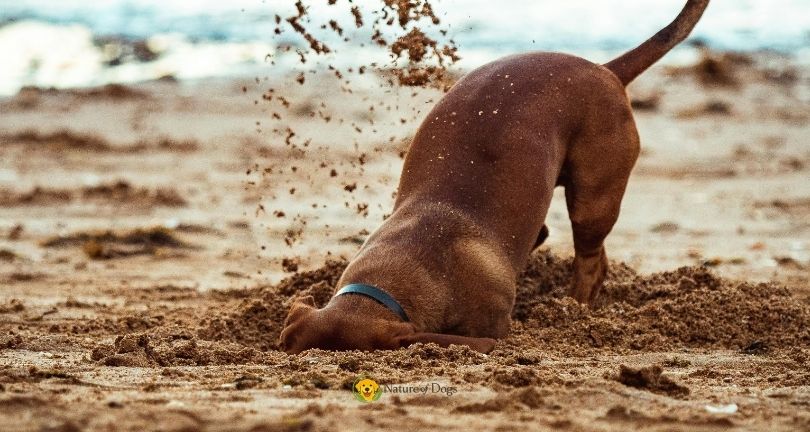
Why do dogs dig holes? It usually comes down to natural instinct, driven by boredom, a need to cool down, or the urge to hunt small pests underground.
Common reasons why dogs dig holes
| Cause | How common | How to confirm it | Fix it yourself? |
|---|---|---|---|
| Boredom and excess energy | Most of the time | Dog digs randomly across open lawn areas | Yes |
| Temperature control | Very common | Shallow pits under trees or beside walls | Yes |
| Prey drive and hunting | Fairly common | Holes clustered around roots or pest trails | Yes with care |
| Separation distress or escape | Somewhat common | Deep trenches directly along fences or gates | No |
| Burying valuable items | Occasional | Single holes containing chews, toys, or bones | Yes |
| Nesting instinct | Rare | Digging in quiet spots before giving birth | Yes with care |
Excess energy and everyday boredom
Dogs dig into lawn turf because an understimulated brain seeks its own physical job. When a dog spends hours outdoors without toys or interaction, digging turns into self-rewarding entertainment. This habit causes wide, scattered divots rather than one concentrated crater.
Fixing it requires daily physical and mental stimulation. Add 30 to 45 minutes of brisk walking every morning for a medium-sized adult dog, though active working breeds like cattle dogs need closer to 90 minutes. Provide food-stuffed rubber toys instead to redirect their paws. If your dog still claws the dirt after solid exercise, set up a dedicated sandbox zone.
Cooling down on warm days
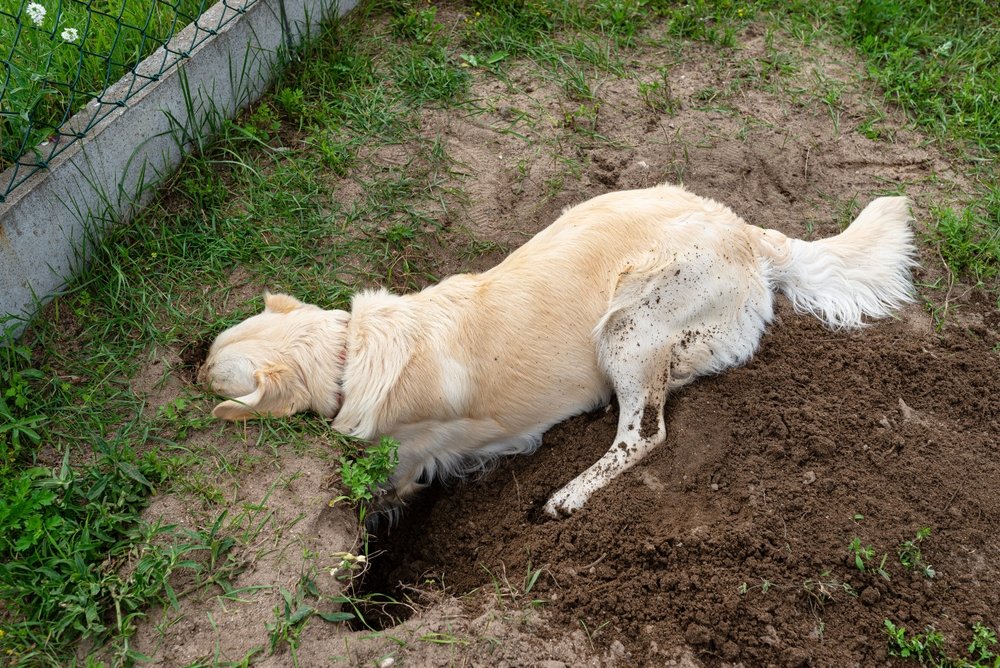
Dogs scrape away warm topsoil because the earth underneath stays cool against their bellies. Unlike humans, dogs can’t sweat through their skin to shed excess body heat. They rely on panting and direct contact with cool surfaces, known as conductive cooling. You can tell this cause apart from simple boredom because the dog digs a wide, shallow scoop and immediately curls up to lie inside it.
These holes appear almost exclusively in shaded areas, beneath patio overhangs, or under low bushes during midday heat. Provide an artificial cool spot instead. Place an elevated mesh cot in a shady corner, or set out a shallow plastic pool with two inches of fresh water.
Hunting small burrowing animals
A dog’s sharp hearing often picks up tiny animals moving below the surface of the ground. Moles, voles, gophers, and earthworms create vibrations that trigger a high prey drive. The dog targets a very specific patch of dirt, sniffing the hole intensely, barking, and tearing out roots with their teeth.
You can spot this trigger by checking the layout of the holes: they follow a distinct line matching an underground tunnel, or cluster around large tree roots and stone borders where rodents nest. Check the base of your lawn shrubs at dusk for rodent activity using a flashlight. If you see narrow ridges of raised soil, pests are present. The fix requires clearing the garden pests rather than punishing the dog. Apply humane underground rodent traps or plant castor-oil-based lawn repellents. Never place toxic rodent poisons where a pet can reach them, as swallowing a poisoned rodent can cause severe internal bleeding.
The less likely causes
- Separation anxiety causes pets to dig deep escape pits at gates, accompanied by constant howling, drooling, or chewed fence slats.
- Scent burying happens when a dog hides high-value bones or unfinished raw chews, producing deep, isolated holes with packed dirt on top.
- Nesting behavior shows up in pregnant or nursing females looking for a safe, sheltered den away from foot traffic.
- Genetic digging instincts run strong in earthdog breeds like Dachshunds and Terriers, which are naturally bred to follow badgers into tight tunnels.
This guide isn’t for dogs showing severe barrier anxiety or extreme escape panic. If your dog shreds their own paws or breaks teeth trying to dig beneath concrete footings, stop immediately and contact a certified veterinary behaviorist.
What a fix usually involves
Solving digging demands consistent time, training tools, and garden barriers. If your yard has active rodents, you’ll need pest control traps or professional extermination. For boredom, you need durable puzzle toys and extra leash time each day.
Creating an approved digging pit is another popular DIY choice. This requires a child’s plastic sandbox, clean play sand, and buried chew toys to guide their paws to the correct spot.
Frequently asked questions
Can dogs dig because they smell something?
Yes. Dogs possess up to 300 million olfactory receptors in their noses, allowing them to smell buried insects, old bones, roots, and burrowing mammals moving deep under the dirt.
Why do dogs dig holes and lay in them?
They do it to cool down on warm afternoons. The moist soil several inches below the surface stays much cooler than the air, allowing dogs to lower their body temperature by resting their bellies against it.
How long does it take to stop a dog from digging?
About two to three weeks of consistent daily redirection. The exact timeline varies by breed and habit length, so check your dog’s progress daily while offering praise for using approved spaces like sandboxes.
Is it safe to fill dog holes with their poop?
No. Burying feces often encourages dogs to dig nearby to remove the smell, and it exposes your yard to harmful parasites like roundworms that can infect other family pets.
What happens if you leave digging untreated?
Your yard suffers broken landscape lines, damaged root systems, and dangerous tripping hazards. Dogs can also escape under fence boundaries, increasing the risk of getting lost or hit by passing cars.
Does it matter what breed my dog is?
Yes. Terriers, Dachshunds, and Beagles were selectively bred over centuries to hunt quarry underground, meaning their urge to dig dirt is much stronger than that of herding or toy breeds.
Final Thoughts
If your furry friend won’t stop digging, try giving them a dedicated sandbox or more daily exercise to burn off that extra energy. You’ll find that a tired, happy dog is much less likely to ruin your lawn. Don’t hesitate to talk with your vet if the behavior suddenly becomes destructive.
Related guides