Dog Leash vs Retractable Leash: Which One Is Safer for Walks
Last Updated on October 4, 2026
A standard flat lead wins the Dog Leash vs Retractable Leash debate for everyday walking because it gives you direct physical control and prevents sudden rope burns. A retractable model only makes sense in wide, empty fields where your pet can explore safely without running into cars or other animals.
The options compared
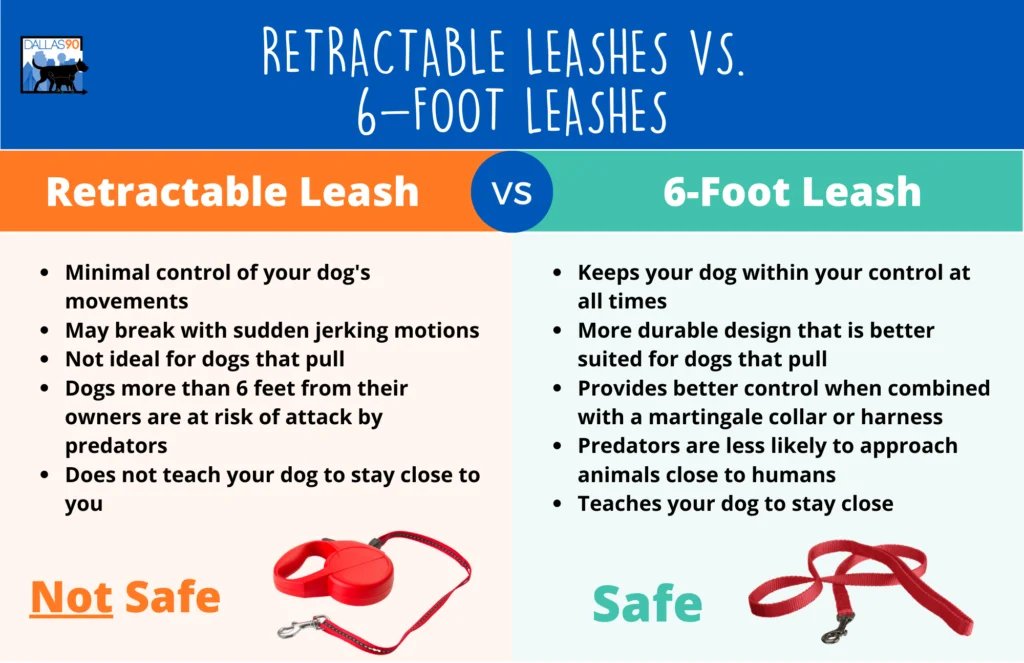
Here is how the main styles compare for daily control, maintenance, and safety.
Standard Flat Leash
A standard nylon or leather lead keeps your pet within a safe, fixed boundary.
- Clip the heavy-duty swivel snap to the front or back ring of your dog’s harness, depending on your training needs.
- Thread your thumb through the wrist loop and fold the remaining webbing into your palm to hold the standard 6-foot length.
- Keep an 18-to-24-inch slack loop between your hand and the harness so your dog doesn’t feel constant tension.
- Step forward, keeping your holding hand anchored near your hip to maintain your center of balance.
This setup offers instant physical feedback, so you can redirect your dog away from road hazards in a fraction of a second. It also doesn’t jam or break when pulled suddenly. However, it gives active dogs limited freedom to run and sniff freely during exercise. If your dog pulls hard enough to pull you off balance, seek help from a certified trainer who belongs to the Association of Professional Dog Trainers to work on loose-leash skills.
Retractable Leash
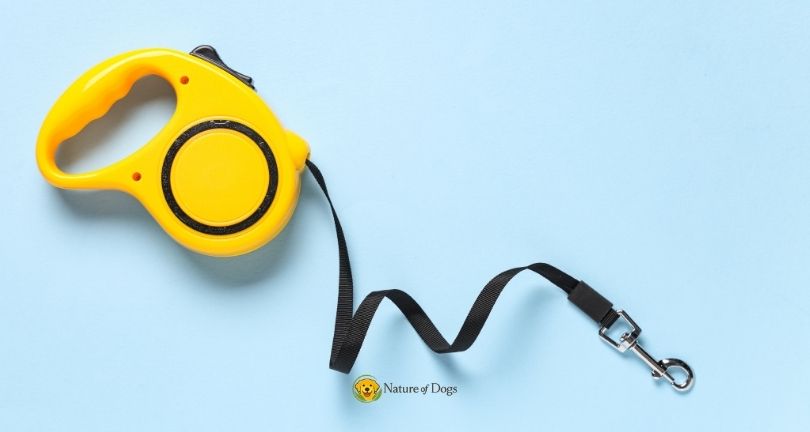
A retractable device houses a thin cord inside a spring-loaded plastic casing that extends and locks with a thumb button.
- Inspect the plastic handle and the thin cord for visible fraying before you step outside.
- Clip the end clasp to a back-clip harness, never to a neck collar.
- Release the thumb brake to allow the line to pay out as your dog moves away from you.
- Press the thumb button down firmly and push the lock switch forward when you need to freeze the line at a specific length.
It lets a dog explore open spaces without dragging a muddy strap across the damp ground. The spring also keeps excess slack from tangling under the dog’s legs. The major weakness is the complete lack of physical leverage once the line extends past 10 feet. The thin cord can also cause friction burns or lacerations if it wraps around a finger or leg.
Long Training Line
A long line is a fixed strap measuring between 15 and 30 feet that offers freedom without a mechanical spring.
- Lay the webbing straight on the ground to clear any knots before attaching it.
- Snap the brass clip to the dog’s chest or back harness ring.
- Hold the bitter end firmly, letting the remaining 15 to 20 feet trail loosely behind the dog across the grass.
- Step onto the strap with the flat sole of your shoe to stop movement if the animal bolts toward a distraction.
This tool builds strong distance recall while keeping you anchored to your pet legally in public open spaces. It won’t suddenly snap back like a spring-loaded plastic mechanism. Its primary drawback is that the long, loose webbing easily tangles around trees, posts, and ankles.
Which one should you use?
Pick the standard flat leash for instant control around busy driveways.
Choose a 20-foot long training line for recall training.
The trade-off is freedom versus safety. More distance provides enrichment but reduces your ability to protect them from hazards. A standard lead sacrifices reach to ensure you can pull your pet away from hazards.
The rules that apply whichever way you choose
Always follow local municipal leash laws, which specify the required length and type of tether for your area.
Prepare your gear before leaving the house: test the snap bolt spring to ensure it closes completely, and check the webbing for teeth marks or partial tears.
Partway through your walk, look down to confirm the snap hook hasn’t unscrewed or twisted open against the harness ring. Once you return home, wipe down wet gear and store lines out of your dog’s reach. If a dog chews through nylon threads, the structural limit drops instantly, creating a serious snap hazard next time they pull.
Frequently asked questions
Can you use a retractable leash with a collar?
No, you should never pair a retractable lead with a neck collar. If the animal sprints to the end of the line, the sudden mechanical stop concentrates tremendous force on the dog’s trachea. This impact can cause severe airway damage or neck trauma. Always pair these devices with a padded harness.
Why do vets dislike retractable leashes?
Vets see frequent lacerations, cord burns, and finger fractures caused by the thin cords wrapping around hands and legs. The thin cord moves fast when a dog bolts, cutting deep into skin. Dogs also suffer blunt-force injuries when the line snaps and the plastic casing recoils into their faces.
How long does a standard dog leash last?
A quality nylon or leather leash usually lasts for several years with regular use. The exact lifespan depends on weather exposure and whether your pet chews the fabric. Check the stitching near the clip monthly, and discard the lead immediately if you spot frayed threads or rusted metal springs.
Is it safe to grab the cord of a retractable leash?
No, you must never grab the thin cord with a bare hand to reel in your pet. Grabbing a moving line causes severe friction burns, skin tears, and even finger amputations. If you must shorten the distance, use the thumb brake on the plastic handle, take steps forward, and repeat.
What happens if the locking button fails?
If the internal lock fails, you lose all immediate braking control over your dog. A loose animal can run straight into oncoming traffic or approach an aggressive, leashed dog before you can react. When a lock slips under pressure, retire the housing immediately; don’t attempt to open or repair the internal spring.
Final Thoughts
Choosing the right tool doesn’t have to be complicated. If you’re unsure, try a sturdy six-foot lead on your next outing to see how much better your communication becomes. You’ll likely find that you’re more relaxed, and your dog will appreciate the clear signals you’re sending during your daily strolls together.