Puppy Crate Training: 6 Mistakes to Avoid for Success
Puppy Crate Training: 6 Mistakes to Avoid centers on rushing the confinement process, which causes severe separation distress and sets housebreaking back by weeks. Successful confinement relies on pairing the enclosure with high-value meals, leaving the door unlatched initially, and building isolation tolerance in brief increments.
Common puppy crate training mistakes

| What most people do | What to do instead | Why it matters |
|---|---|---|
| Buy an adult-sized crate open fully | Use a divider panel to limit floor space | Prevents using one corner as a bathroom |
| Shove the puppy inside immediately | Lure inside with treats, door staying open | Stops immediate panic and fear responses |
| Let puppy out while it barks | Wait for 5 seconds of calm silence | Prevents teaching that whining opens doors |
| Leave a 10-week-old for 6 hours | Cap daytime confinement at 2 to 3 hours | Avoids painful accidents from weak bladders |
| Use the enclosure as a punishment | Send pup inside only for positive rest | Keeps the interior safe and welcoming |
| Line the base with loose pee pads | Use a bare plastic tray initially | Prevents intestinal blockages from chewed fabric |
Size the enclosure to match current body dimensions
Buying a large crate for a growing puppy seems economical, but excessive space ruins housebreaking. If the interior offers enough floor room to sleep on one side and eliminate on the other, house training fails.
To prevent this issue, pick an enclosure equipped with an adjustable metal divider panel. Set the panel so the puppy has enough room to stand up, turn around completely, and lie down comfortably with its legs extended. For toy breeds, avoid adult wire grids; for large breeds, buy a crate sized for adult weight and move the divider as the puppy grows.
Never open the door during active vocal tantrums
Opening the gate while an animal screams teaches it that vocal distress controls human movement. Doing this trains the puppy to scream louder next time.
Wait out the tantrum completely. If the puppy whines, turn your back and stand still. The moment you get 5 consecutive seconds of silence and four paws on the floor, open the latch calmly. The Humane Society of the United States crate guidelines state that confinement must always feel safe, warning owners never to use the enclosure for punishment or keep animals locked away beyond their physical endurance.
Honor strict physical limits on bladder capacity
Expectations around puppy bladder control often ignore basic biology. A standard daytime rule: take your puppy’s age in months, convert that number to hours, and treat that figure as the absolute daytime limit for confinement. An 8-week-old puppy can hold urine for 2 hours at most during the day; a 12-week-old pup maxes out around 3 hours.
Forcing an animal to wait past its physical limit causes internal stress and bladder infections. It also forces the puppy to soil its own bed, which breaks the natural den instinct that keeps clean animals from resting in waste. This daytime holding formula assumes the puppy is resting calmly; if the puppy plays hard or drinks water right before resting, cut that holding time in half.
Advice you can ignore
- Put puppy pee pads inside the enclosure: Pups tear these apart and swallow the plastic backing, which risks an emergency intestinal blockage.
- Cover the wire frame with heavy, dark blankets: Thick fabrics block airflow and cause rapid overheating, especially in plastic airline crates.
- Feed all meals outside to keep the den clean: Serving daily food bowls directly inside creates an immediate positive association with the space.
- Spray bitter deterrent on the metal wire mesh: Dogs rarely chew wire bars due to taste; they bite metal because of acute confinement stress.
The right way, start to finish
- Place the crate in an active living area against a solid wall, adjusting the divider panel so the pup can only stand, turn, and lie flat.
- Toss 5 high-value treats into the back of the enclosure with the gate latched open, letting the dog enter and exit freely for 10 minutes.
- Feed the puppy’s full regular meal inside the crate twice daily for 2 days, leaving the door completely unlatched while it eats.
- Close the door gently while the puppy eats its third meal, opening it the exact second the bowl is empty to build calm acceptance.
- Provide a frozen food toy inside, latch the wire door, and sit quietly beside the closed enclosure for 10 minutes without making eye contact.
- Walk out of sight into an adjacent room for 5 minutes, returning to open the door only when the puppy remains entirely quiet.
- Extend daytime confinement sessions by 15 minutes each day, taking the puppy outside on a leash immediately after unlatching the door.
Frequently asked questions
Can a puppy sleep in a crate all night?
Yes, healthy 8-week-old puppies can sleep overnight in an enclosure, but you must take them outside for bathroom breaks. Very young puppies rarely sleep past 4 hours without urinating, so set an alarm to carry them out halfway through the night.
Why is my puppy suddenly barking in the crate?
A sudden bark usually signals a full bladder, loneliness, or boredom. If the pup was quiet for an hour, it probably needs to relieve itself outside immediately; if you latched the gate 30 seconds ago, it wants attention.
How long can an 8-week-old puppy stay crated?
About 2 hours maximum during the daytime. Their internal organs are tiny and can’t store urine longer while awake. Nighttime allows longer stretches because heart rates drop, slowing down urine production.
Is it safe to leave a collar on inside the crate?
No, never leave a regular collar or harness on a crated dog. Tags and metal buckles catch easily on wire openings or crate seams, which presents a severe strangulation hazard if the animal twists in panic.
What happens if I use the crate as punishment?
Your dog will view the space as an enemy and fight entry. Shoving an animal inside during anger turns a comfortable shelter into a frightening cage, ruining months of training within days.
Does it matter if I choose wire or plastic?
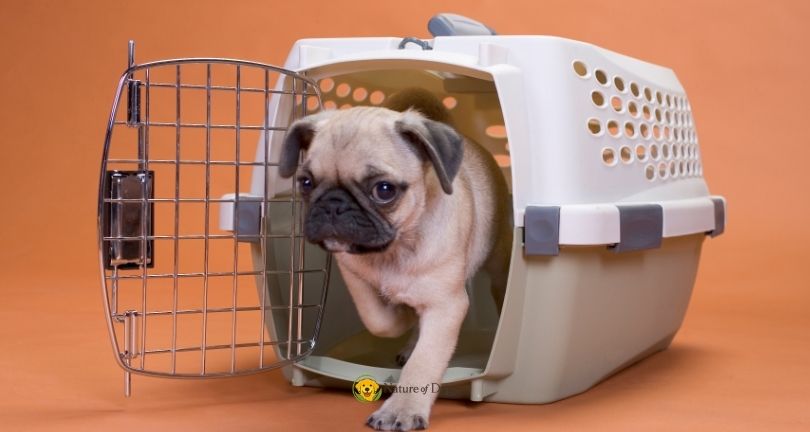
Yes, wire frames maximize indoor airflow and visibility for warm climates, while plastic travel carriers provide darker, cave-like security for nervous personalities. Select plastic if your dog startles at regular household movement.
Final Thoughts
Patience is the secret ingredient to a happy, well-adjusted pet. If you stay consistent and keep these lessons in mind, your puppy will soon view their crate as a cozy, safe sanctuary. Take a deep breath and start your next practice session today; you’ve got this, and they’ll be settled in no time.