How to Teach Your Dog to Sit, Stay, and Come: A Simple Guide
How to teach your dog to sit, stay, and come requires three daily 5-minute sessions using small pea-sized treats and clear hand cues. You can build these three core behaviors within two weeks by practicing them in a quiet room before adding distractions. This basic routine suits healthy dogs and puppies over eight weeks old best.
What you’ll need
- Soft, pea-sized training treats (cut hot dogs or plain boiled chicken breast work well)
- A standard 6-foot flat nylon or leather leash (retractable leashes won’t work)
- A flat buckle collar or a well-fitted back-clip harness
- A quiet room with no other pets or family members moving around
- A treat pouch or deep pocket for quick access
Plain cooked chicken works well, but dry biscuits take too long to chew. If your dog shows food guarding or snaps, stop and consult an accredited professional at the International Association of Animal Behavior Consultants.
Step-by-step
- Hold a single treat between your thumb and forefinger right at your dog’s nose level.
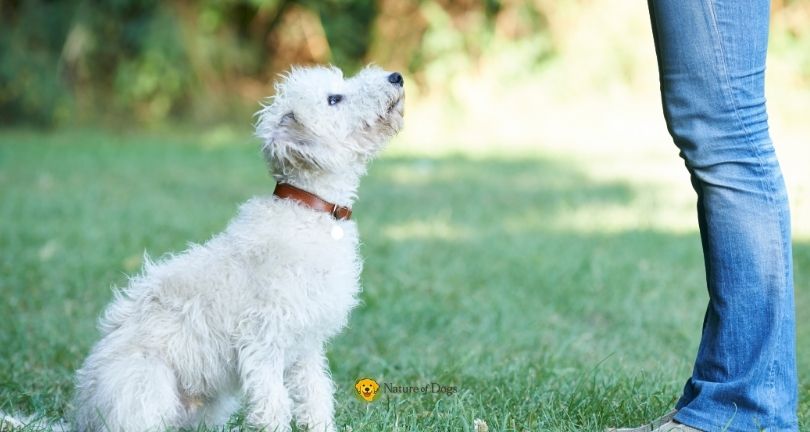
- Move your hand slowly up and back over their head toward their tail, keeping the treat within two inches of their muzzle. As their nose tilts up to follow the food, their rear end naturally touches the floor.
Tip: Don’t push your dog’s hips down with your hand. That causes resistance and slows their learning down.
- Mark the exact moment their rear hits the floor by saying “Yes!” and feed the treat immediately. Repeat this 5 times, then add the spoken word “Sit” just before moving your hand.
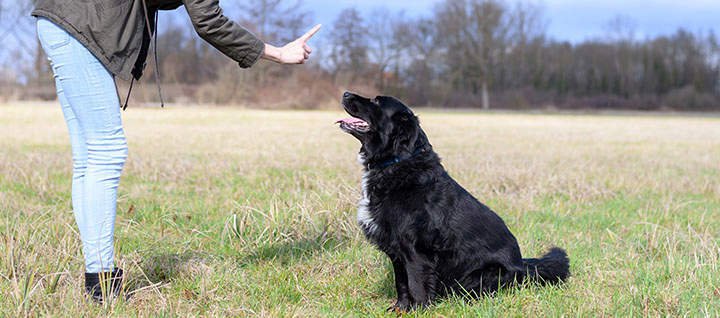
- Tell your dog to “Sit,” open your flat palm toward their chest like a stop sign, and wait for 2 seconds. If they hold still, say “Yes!” and deliver one treat while they remain seated.
Careful: If your dog breaks their sit early, don’t yell or repeat the command. Reset them into a sit and shorten your wait time to 1 second.
- Increase your wait time by 1 second each turn until your dog waits for 10 seconds reliably. Step backward 2 paces; if they stay in place, step back in, mark “Yes!”, and reward.
- Clip on the 6-foot leash, back away 4 feet while your dog is looking at you, crouch down, and call their name followed by “Come!” in an upbeat voice.
- Reward with 2 treats the instant they reach your knees, then release them with the word “Free.” If your dog bolts past you, step on the leash lightly to stop their momentum.
Adjusting for distractions and space
Different surroundings change how your dog focuses during practice sessions.
| Training Environment | Added Session Time | Main Difference | What to Watch For |
|---|---|---|---|
| Quiet Living Room | 5 minutes daily | Baseline baseline environment with zero scent trails | Fast responses within 2 seconds |
| Fenced Backyard | 10 minutes daily | Mild wind, grass smells, and outdoor sounds | Sniffing ground instead of watching hands |
| Public Sidewalk | 15 minutes daily | Moving people, cars, and passing dogs | Stiff body posture and missed cues |
| Dog Park Perimeter | 20 minutes daily | Extreme excitement and heavy sensory overload | Refusing treats or pulling hard on leash |
It’s safer to build reliable cues in a quiet room first than to fail outside by rushing into noisy areas too early.
How to tell you did it right
A correct response shows your dog moving cleanly into position within 2 seconds of a single cue without hesitation. A poor response looks slow, with the dog wandering away, sniffing, or requiring three repeated verbal commands before reacting. Say the cue once, wait 3 seconds, and lure if they miss it. Check your dog’s focus before each drill.
Humane training rules and session wrap-up
Reward-based training is recommended. After 5 minutes, store leftover food, unclip the leash, and provide water. Log successful repetitions to track progress. If your dog shows extreme fear, consult a veterinary behaviorist.
Other ways to do it
Clicker training
Use a mechanical noisemaker to mark the behavior instead of saying “Yes.” The sharp metallic sound speeds up the dog’s timing recognition. It cuts learning time, but requires juggling gear.
Long-line open field work
Swap the 6-foot lead for a 30-foot webbing line in an open field. This covers long-range recall safely. It requires more control but builds distance quickly.
Group obedience classes
Train alongside other owners under an instructor’s guidance at a local facility. Classes add controlled social distraction. It costs more, but instructors fix errors immediately.
Frequently asked questions
Can I train an older dog to sit, stay, and come?
Yes, older dogs learn these three cues easily using positive reinforcement. Keep their training sessions under 3 minutes at a time to prevent sore joints from sitting and standing repeatedly, especially for dogs suffering from mild arthritis.
Why does my dog ignore the come command outside?
Your dog ignores the recall outdoors because outdoor smells and sights reward them more than the food you’re holding. If a distraction is too high, double your treat value to real meat and practice on a long leash first.
How long does each cue take to learn?
Most dogs learn the basic mechanics of sit within 3 days, while stay and come usually take 2 weeks of daily practice. Reliable execution around heavy outdoor distractions often requires 4 to 6 weeks of consistent proofing.
Is it safe to train without a leash outdoors?
No, never practice these cues off-leash in unfenced areas until your dog shows total recall reliability over several months. Sudden wildlife sightings or loud noises can trigger prey drive, causing an off-leash dog to bolt into traffic.
What happens if I push my dog’s hips down to sit?
Pushing your dog’s hips down makes them lean upward against your hand pressure through natural opposition reflex. It creates physical frustration and slows training down, whereas luring their head upward safely tucks the hips onto the floor without force.
Final Thoughts
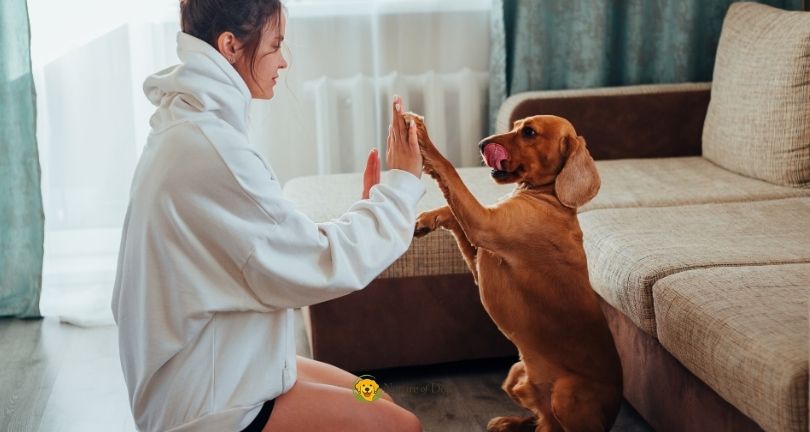
Consistency is the secret to your dog’s success, so don’t give up if progress feels slow at first. Once your pup follows these basics reliably, you’ll be ready to try fun tricks like shaking hands or rolling over. They’ll love the extra attention, and you’ll enjoy building an even stronger bond together.