Positive Reinforcement Dog Training: A Step-by-Step Guide
Positive reinforcement dog training uses immediate rewards like food, play, or praise to encourage good behavior rather than physical punishment to stop bad habits. You mark the exact action you want within 1 to 2 seconds and immediately follow it with a high-value reward. This guide explains how to time your markers, fade food out over time, and handle stubborn habits without losing progress or confusing your dog.
How positive reinforcement training works

This method teaches animals through operant conditioning, a concept developed in behavioral psychology. When a dog performs a desired action, you provide a pleasant outcome, which makes that action more likely to happen again in the future.
The biggest myth is that this method is just bribing your pet with food forever. In reality, food acts as an early paycheck while the dog learns what your words mean. Once your dog understands a cue, replace food with real-life rewards like play or praise. If a dog refuses to work without seeing a treat first, the handler accidentally used food as a lure instead of a reward after the fact.
The basic method
- Cut high-value treats into 10 to 15 pea-sized pieces before starting so you don’t overfeed your pet or spend time breaking snacks apart.
- Choose a quiet room with zero outside distractions, like a hallway or living room, for your training space.
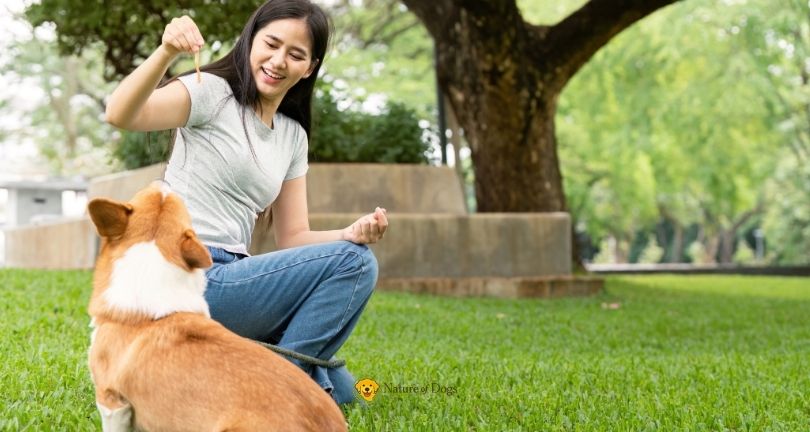
- Pick a distinct reward marker, such as a sharp clicker sound or the single word “Yes,” which tells the dog the exact moment they did the right thing.
- Wait for your dog to offer the target behavior naturally, or guide them gently with your empty hand into position.
- Deliver your marker word or click within 1 second of the dog completing the behavior, such as their rear touching the floor for a sit.
- Hand the dog exactly 1 pea-sized treat within 2 seconds of the marker sound, keeping your hands low to avoid jumping.
- Repeat this cycle for 3 to 5 minutes, running through roughly 8 to 10 repetitions, then stop while the dog is still enthusiastic.
Delivery speed determines your success. If the pet shows aggression or tries to bite, step back.
Key numbers and settings at a glance
Here are the standard working limits for running daily training sessions with your dog:
| Situation | What to use | How long | What to watch for |
|---|---|---|---|
| Brand-new cue | Pea-sized soft treats | 3 to 5 minutes per session | Dog walking away or sniffing the floor |
| Distracting park | High-value meat or cheese | 5 to 8 minutes per session | Staring past you at other dogs |
| Daily maintenance | Verbal praise and play | 10 to 30 seconds throughout the day | Slow responses to basic verbal cues |
| High-energy puppy | Favorite tug toy | 2 to 4 minutes per burst | Teeth accidentally grazing your hands |
| Shy or fearful dog | Low-stress kibble or quiet praise | 2 to 3 minutes in a quiet room | Trembling, lip-licking, or backing up |
What separates good results from bad ones
Preparation and mechanical skills
Skilled handlers prepare their rewards before bringing the dog into the room. Reaching for the treat bag before the dog finishes moving turns your food into a bribe, which weakens their focus over time.
Partway checks and environmental control
Check your dog’s engagement halfway through the session. When this happens, stop asking for new tasks. Pushing through boredom creates messy responses tomorrow. Leave difficult distractions alone until the dog performs the basic motion smoothly on the first try indoors.
Common problems and quick fixes
Use this breakdown to troubleshoot moments when your dog stalls during a session:
| What you notice | What it usually means | What to do first |
|---|---|---|
| Dog ignores a known verbal cue | The environment has too many distractions | Move back 10 feet from the distraction |
| Dog jumps toward your treat hand | You’re moving the food too high | Lower your treat delivery to chin height |
| Dog wanders off during practice | The practice session ran too long | End the game and let the dog rest |
| Dog won’t work without visible food | Food was shown before the cue | Keep hands behind your back until you mark |
Standards from professional bodies
Professional welfare organizations advocate against physical punishment, shock collars, and choke chains during pet instruction. The American Veterinary Society of Animal Behavior position statement on humane dog training recommends using positive reinforcement methods as the primary approach for all training and behavior modification.
Maintaining good habits over time
Once your pet learns a cue, switch from continuous rewards to an intermittent schedule. That means you reward some successful responses with a treat, while offering verbal praise for the rest. Use verbal praise indoors and high-value treats like chicken for outdoor distractions. If an old cue begins to fade, step back to simple food rewards for a short time to sharpen their memory.
When to use a different approach
Standard food-based reinforcement isn’t the right starting tool in every scenario.
- Active dog fights or predatory chasing: A dog running at a deer won’t notice a piece of kibble. Physical barriers like six-foot leashes, baby gates, and secure harnesses must manage safety first.
- Extreme separation distress: Dogs experiencing true panic when left alone can’t digest food or focus on commands. You must use gradual desensitization plans instead of basic obedience tasks.
- Severe food aggression toward humans: Tossing food near a dog that attacks over resources can cause dangerous bites. This isn’t for owners working alone without hands-on help from a certified trainer.
Frequently asked questions
Can you train an aggressive dog with positive reinforcement?
Yes. Professional behaviorists use food markers combined with controlled distances to change how an aggressive dog feels about their triggers. You keep the dog far enough away so they stay calm, then reward them for looking at the trigger without barking or lunging.
How long does positive reinforcement take to work?
About two to three weeks of daily five-minute sessions will teach a healthy dog five basic behaviors reliably indoors. Training takes several months of steady practice to work equally well in chaotic outdoor environments like parks or busy sidewalks.
Why does my dog only listen when I hold a treat?
You accidentally showed the food before giving the cue, which turns the reward into a visual bribe. Keep your treats completely hidden in a pocket or pouch behind your back until after you use your marker word.
What happens if I reward bad behavior by accident?
Your dog will repeat the mistake because the reward confirmed the action. Simply pause for ten seconds, ignore the dog, and start the sequence over without handing over any treat until they do the exact behavior you requested.
Is positive reinforcement safe for young puppies?
Yes. It’s completely safe for puppies as young as eight weeks old because it avoids physical force and harsh corrections. Use their normal daily kibble instead of high-calorie processed treats to prevent stomach issues during long learning games.
Final Thoughts
Building a strong bond takes patience, but you’ll see the results in your dog’s happy, confident personality. Keep your training sessions short and fun so you don’t burn them out. Grab some extra treats today and spend five minutes practicing a new trick; you’ll be amazed at how quickly they catch on.